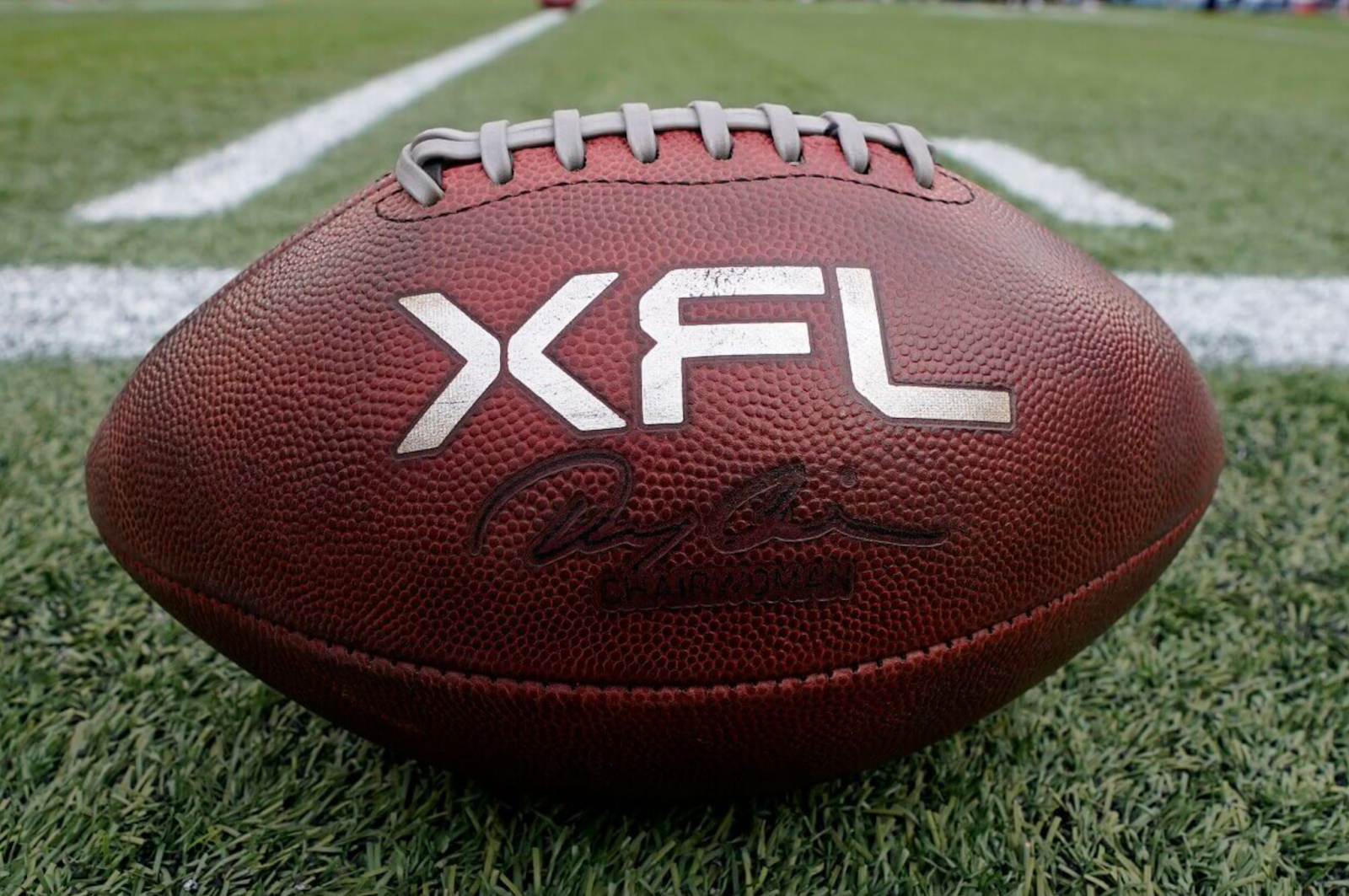
The XFL may have concluded after its 2023 season, but its story certainly didn’t stop there. Rather than disappearing into the long list of spring-football experiments, the league merged with the USFL to form the United Football League, or UFL, which began play in 2024.
For fans, that means much of the familiar energy remains: recognisable team identities, players looking to make their mark, inventive rules and a compact season that arrives when many people are ready for more football. The name on the badge has changed, but the appetite for meaningful spring games is still very much there.
The UFL now sits at the centre of the modern US spring-football picture, carrying ideas and people forward from both leagues. It’s not simply a renamed XFL, nor is it a continuation of the USFL alone. It’s a new competition built from two recent histories, with plenty for supporters to follow.
A quick spring-football timeline
Spring football has rarely taken the straightforward route. Its history is full of bold launches, sudden pauses and determined returns. The XFL’s journey is a particularly good example.
2001: the original XFL arrives
The first XFL launched in 2001 as a joint venture involving WWE and NBC. It arrived with a loud, entertainment-led presentation and a handful of rules designed to set it apart from the NFL.
Some aspects attracted curiosity, while others proved divisive. The league lasted one season, but it left behind an odd little legacy. A few concepts, including certain camera angles and broadcast approaches, helped spark conversations about how American football could be presented differently.
It also showed that people were willing to give spring football a look, provided there was a reason to care about the teams and the players.
2020: a more football-focused revival
The XFL returned in February 2020 with a noticeably different tone. It still had personality, but the focus sat more firmly on football operations, quicker games and rules intended to keep matches moving.
That season ended abruptly when the pandemic halted sporting competition. Even so, the brief run generated interest in teams such as the DC Defenders, St Louis Battlehawks and Houston Roughnecks. For supporters, it was a frustrating ending because the league had begun to establish its own rhythm.
The XFL’s 2020–23 history) is a useful reminder that a league’s influence isn’t always measured solely by how long a particular season lasts.
2023: the XFL gets back on the field
After a longer pause, the XFL returned for the 2023 season under ownership that included Dany Garcia, Dwayne Johnson and RedBird Capital Partners. Eight teams took part, with Arlington serving as the central training hub.
The season delivered closely watched games, returning fanbases and another chance for players and coaches to show what they could do. Arlington won the championship, defeating DC in the title game, but the wider story was about survival and consolidation.
At the same time, the USFL was operating its own season. Two spring leagues were competing for attention, television windows and player talent. That arrangement was never likely to remain unchanged forever.
2024 onwards: the UFL takes shape
In September 2023, the XFL and USFL announced plans to combine. The newly formed UFL began its first season in March 2024, bringing together eight clubs from the two leagues.
As outlined in the UFL’s background and formation), the merger created a single, more concentrated spring-football competition. That matters because it gives fans one schedule to follow, a clearer league structure and a broader pool of familiar names.
What the XFL passed on to the UFL
A merger can sound clinical on paper, but supporters tend to look for continuity. They want to know whether their team, favourite player or long-running match-up still matters. In the UFL, plenty of the XFL’s DNA remains visible.
Former teams still give fans a home
Several XFL clubs moved into the UFL, including:
Those names carry recent memories with them. A supporter who watched the Battlehawks build a devoted following in 2020 and 2023 hasn’t had to start from scratch. The same goes for Defenders fans, whose game-day identity became one of the most distinctive parts of the modern XFL era.
That sense of recognition is important. Football culture isn’t built only from trophies. It grows through familiar colours, shared jokes, local routines and the feeling that your club has a story worth telling.
Players still use spring football as a platform
One of the most valuable parts of spring football is the opportunity it gives players to put fresh film in front of coaches and scouts. Some arrive after time away from the NFL, while others are trying to turn college success into a professional career.
The UFL’s player movement can be fast, particularly around training camps and the period after the season. A player who impresses over several weeks may earn attention elsewhere, while new faces can arrive and quickly become key contributors.
For fans, that creates an extra layer of interest. You’re not only watching a final score. You’re seeing careers develop in real time.
Coaching continuity gives the league personality
Coaches matter enormously in a short season. There’s less time to recover from a poor start, and the best sides often have clear systems from week one.
The XFL brought well-known coaching figures back into the public eye, while the UFL has retained the idea that experienced staff can give a young league real credibility. Following how coaches manage quarterbacks, special teams and fourth-down decisions can make even an ordinary fixture much more engaging.
I find that legacy storylines are half the fun. Is a former XFL club carrying on its old style? Has a coach brought familiar tactics to a new badge? Has a player found a more settled role after switching teams? These are the details that turn a fixture list into a season.
How to keep up with the modern UFL
The practical side of following a newer league is easier when you keep a few reliable sources bookmarked. Schedules can shift, rosters change and television arrangements vary by season, so it’s worth checking official updates rather than relying on an old social post.
Start with team and league channels
For fixture dates, ticket information, match reports and roster announcements, begin with the league’s official channels and each club’s verified accounts. Team pages are usually the quickest place to find:
- Kick-off times and venue details
- Injury and transaction updates
- Post-match press conferences
It also helps to follow local reporters who cover the clubs week after week. National coverage often focuses on the broadest headlines, while local writers tend to spot changes in training, selection and supporter mood.
Keep an eye on roster movement
Spring leagues move at a different pace to the NFL. A short regular season means there’s little room for a player to settle slowly into form, and rosters can evolve quickly.
If you’re following a team closely, check transactions before each weekend’s games. A new quarterback, a returning defensive starter or a reshuffled receiving group can completely change the feel of a matchup.
For a site covering the league in depth, useful related reading could include internal guides such as:
- Is the XFL still active? Understanding the move to the UFL
- A complete history of spring football leagues in America
- How UFL rosters and player signings work
- Former XFL teams to follow in the UFL
Those explainers give newcomers context without forcing long-time fans to revisit the same basics every week.
Why fan culture is still the heart of spring football
The strongest argument for spring football has never been that it replaces autumn Sundays. It doesn’t need to. It offers a different sort of sporting routine, with its own communities and rituals.
For many supporters, that’s exactly the appeal.
Watch parties feel more personal
A UFL watch party can be a low-key afternoon with friends, a pub gathering or a family sofa session with a second screen nearby. The league’s smaller scale often makes conversations feel more direct too. Fans can recognise regular voices online, trade thoughts after a controversial call and build genuine rivalries without everything becoming overwhelming.
There’s room to be invested without pretending every fixture is the Super Bowl.
Second-screen coverage makes each game richer
Modern football viewing is rarely just about the television broadcast. Fans follow live statistics, team updates, post-match clips and journalists’ notes while the game unfolds.
A few people may be tracking quarterback efficiency. Others will be debating a coach’s decision to go for it on fourth down. Some simply want to see whether their club’s new signing looks the part.
Fantasy-style discussions fit naturally into this environment as well. Even where supporters aren’t playing an organised fantasy game, they enjoy comparing player performances, predicting breakout names and arguing over which defence looks most organised.
Community gives the league its staying power
Spring football has always depended on supporters who are willing to show up, watch closely and give a newer competition time to develop. That community spirit is particularly visible in cities where clubs have built a recognisable identity.
You don’t need decades of history to care. A memorable comeback, a local hero or a packed stand on a sunny Saturday can be enough to make a team feel like yours.
Sponsored Adult Entertainment
For eligible adults only, where permitted. Away from football coverage, Deal or No Deal Slingo is a hybrid bingo/slot-style entertainment game. If you choose to explore it, make sure you understand the rules, use only money you’re comfortable setting aside for entertainment and take breaks when needed. Visit Monopoly Casino for details.
The legacy is still being written
The UFL has given spring football something it has often lacked: a clearer route forward. Its foundation includes former XFL clubs, USFL heritage, experienced coaches and supporters who have stayed curious through every reboot and rebrand.
That doesn’t mean every question has been answered. Leagues grow through consistency, sensible planning and the willingness of fans to make game day part of their routine. But the ingredients are there.
If you followed the XFL, you’ll find plenty that feels familiar in the UFL. If you’re new to it, there’s no need to know every chapter before tuning in. Pick a team, learn a few names and see where the season takes you.